

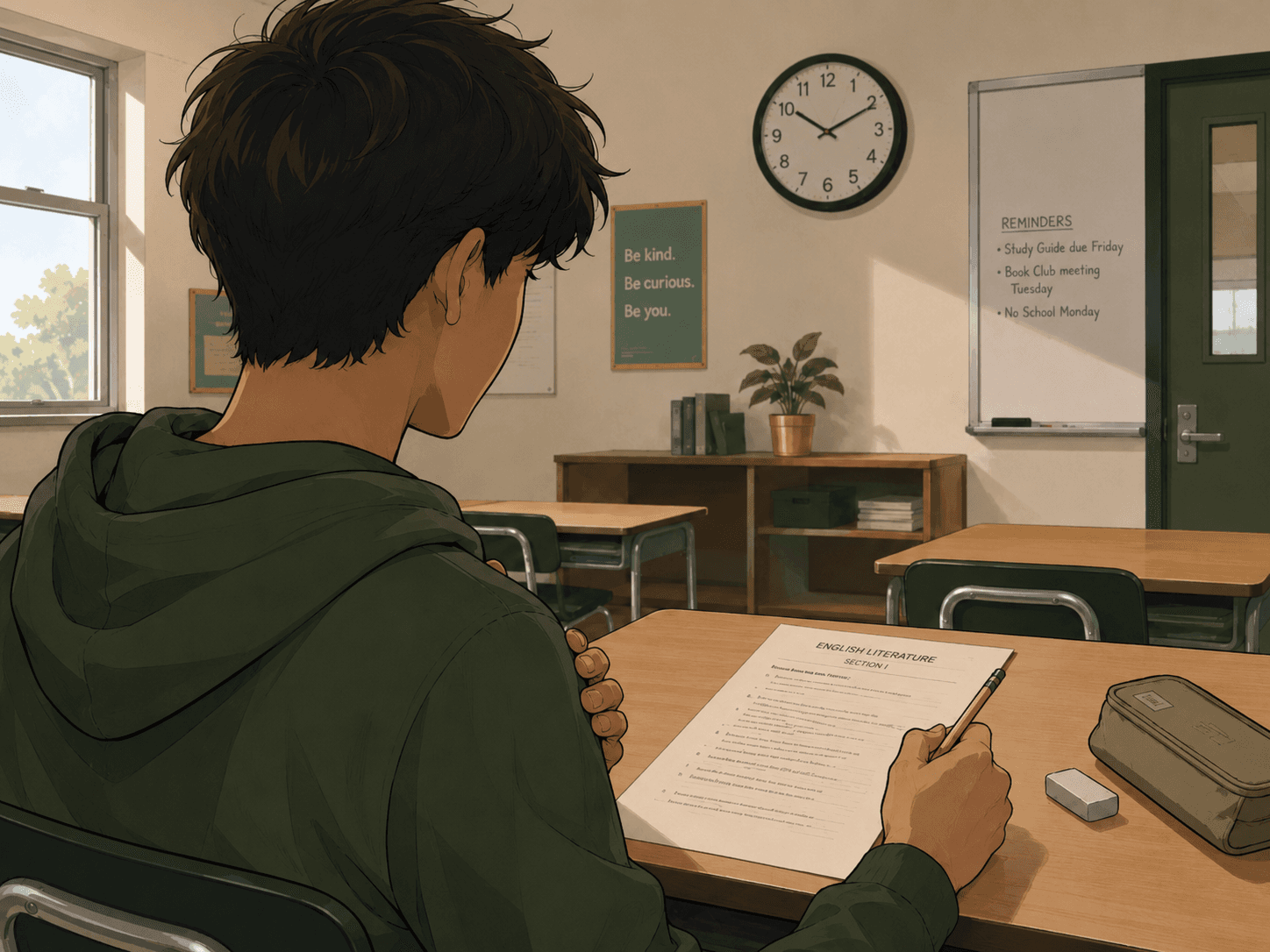
Somewhere between homeroom and the bell, a ten-question quiz became the most important thing in a student's week. Not because the material is hard. Everything else got stacked on top of it: a grade a parent is going to ask about, a GPA a college will eventually look at, a feeling of measuring up to whoever just said the test was easy. Most of what a student is carrying into a test has very little to do with the test itself.
It's Not Just Nerves. It's a Lot of Pressure, All at Once
Grades are the single biggest source of pressure teens report feeling, ahead of how they look or whether they fit in socially. In a national Pew Research survey, 61% of teens said they feel a lot of pressure to get good grades, and another 27% said they feel some pressure to do so. That's not a niche worry. For most teenagers, grades are the main event.
School Doesn't Feel Good Right Now, Either
A 2020 Yale survey asked over 21,000 U.S. high school students to describe, in their own words, how school makes them feel. Close to three-quarters of the words they used were negative. The top three, by a wide margin: tired, stressed, and bored. When researchers checked in with a smaller group of students throughout an actual school day, the same pattern held: negative feelings showed up more than half the time. A test isn't landing on a calm, rested student. It's landing on a tired, already-stressed one.
The Body Doesn't Know the Difference Between "Quiz" and "Emergency"
Test anxiety isn't just being nervous. It can show up physically: headaches, a racing heart, an upset stomach, and mentally, as blanking on material a student actually knows. According to the American School Counselor Association, fear of failure, often shaped by a previous bad experience, is the leading driver. That matters because it means the anxiety usually isn't really about this test. It's about the last one, or the fear of what a bad grade will mean.
What Actually Helps (And It's Not "Just Relax")
Telling an anxious student to calm down rarely works. What does help, according to the Child Mind Institute, is taking away some of the uncertainty a test creates:
- Knowing the format ahead of time (multiple choice, short answer, timed or not), so there are fewer surprises
- Practicing with the same kind of questions the test will actually use, not just rereading notes
- Having a plan for hard questions: skip it, keep moving, come back at the end
- A few minutes of slow breathing right before starting, which sounds small and still helps
- Knowing in advance that it's fine to not know an answer immediately and move on
The Difference Between a Flag and a Failure
If a class also uses proctoring software, there's a second layer of pressure worth naming: the fear of being caught doing something wrong, even when nothing wrong is happening. A student who glances away to think, or whose internet blips for a second, shouldn't have to wonder if that counts against them. A flag is supposed to mean "a teacher will take a look," not "this student is in trouble." Saying that out loud, before the test starts, removes one more thing students are quietly managing while they're supposed to be thinking about the actual questions.
What This Means for How We Test
None of this means lowering standards or getting rid of tests. It means being honest that a test is landing on a kid who's already tired, already under pressure to perform, and already worried about what one bad score says about them. A little preparation, a little plain talk about what's actually being watched and why, and a little grace around what a flag means can take a test from feeling like a verdict back to what it's supposed to be: one measurement, on one day, of how much a student has learned.
Sources
- 1.Pew Research Center: Most U.S. Teens See Anxiety and Depression as a Major Problem Among Their Peers
- 2.Yale School of Medicine: National Survey: Students' Feelings About High School Are Mostly Negative
- 3.Child Mind Institute: Test Anxiety Strategies and Study Tips for Kids
- 4.American School Counselor Association: Battling Test Anxiety